Research
My research focuses on trustworthy visual intelligence: understanding what evidence remains reliable when visual content can be generated and manipulated, and how models can explain the evidence behind their decisions.
Generalizable AIGC & Deepfake Forensics
I study forensic representations that generalize beyond the generators and datasets seen during training. The central question is what traces remain stable as generative models continue to evolve.
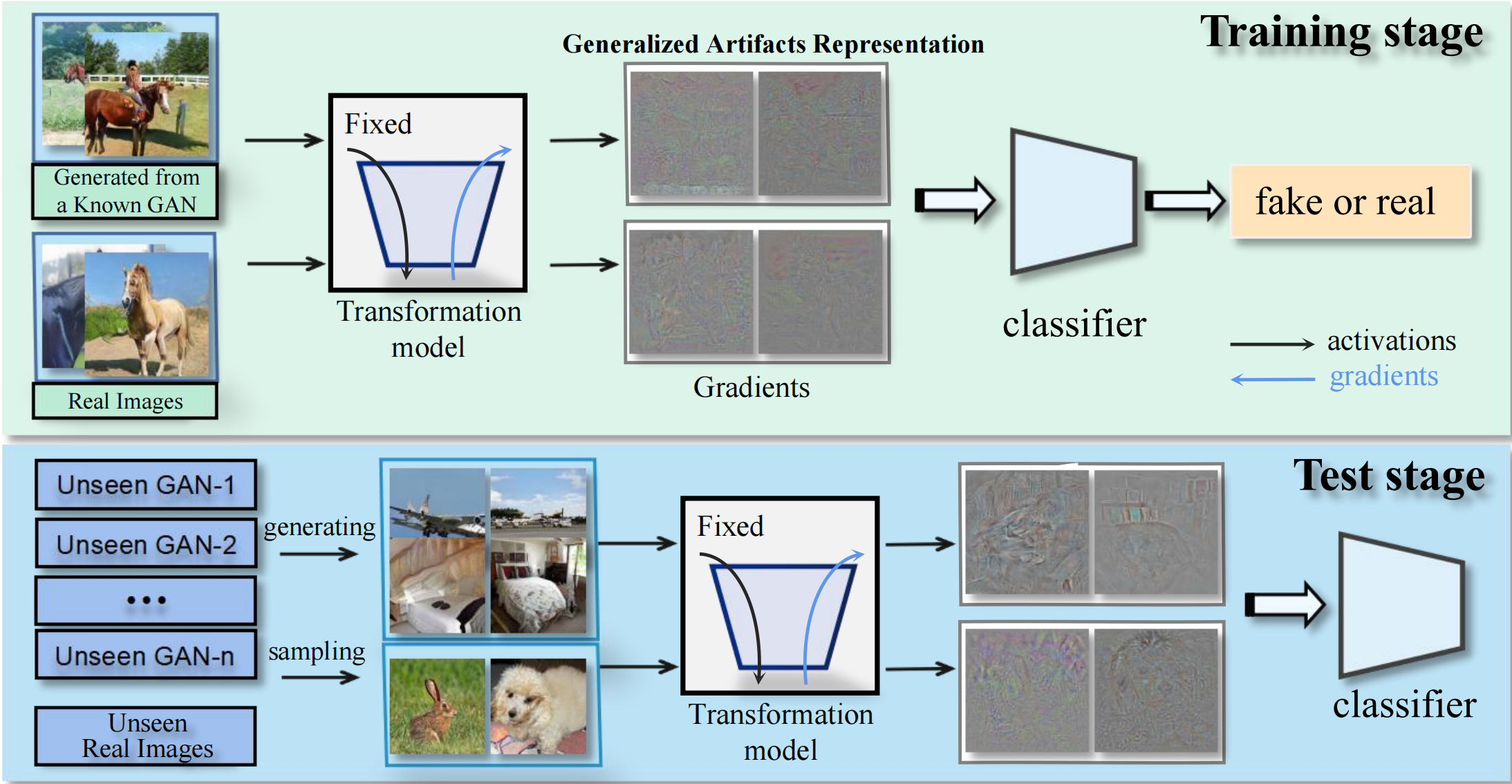
LGrad CVPR 2023
Learning generalized artifacts from image gradients rather than relying on generator-specific appearance.
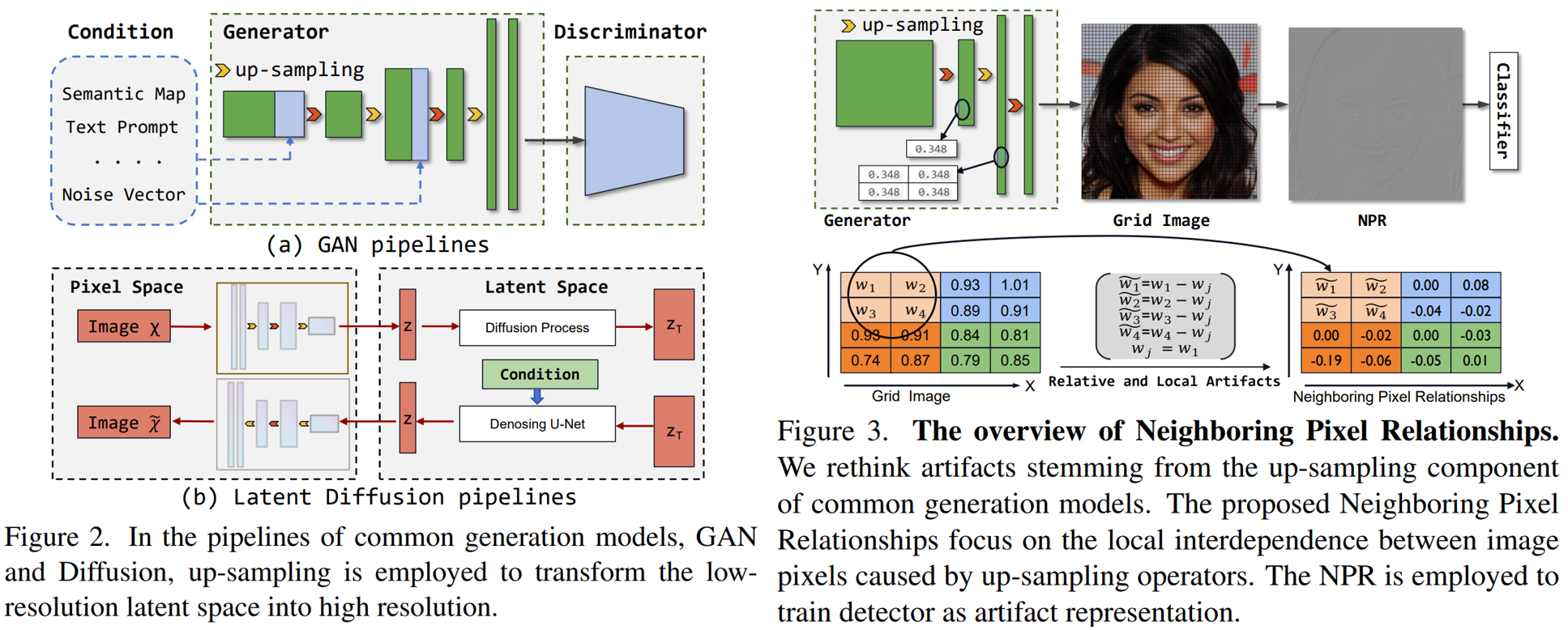
NPR CVPR 2024
Using neighboring-pixel relationships induced by up-sampling operations as transferable generator priors.
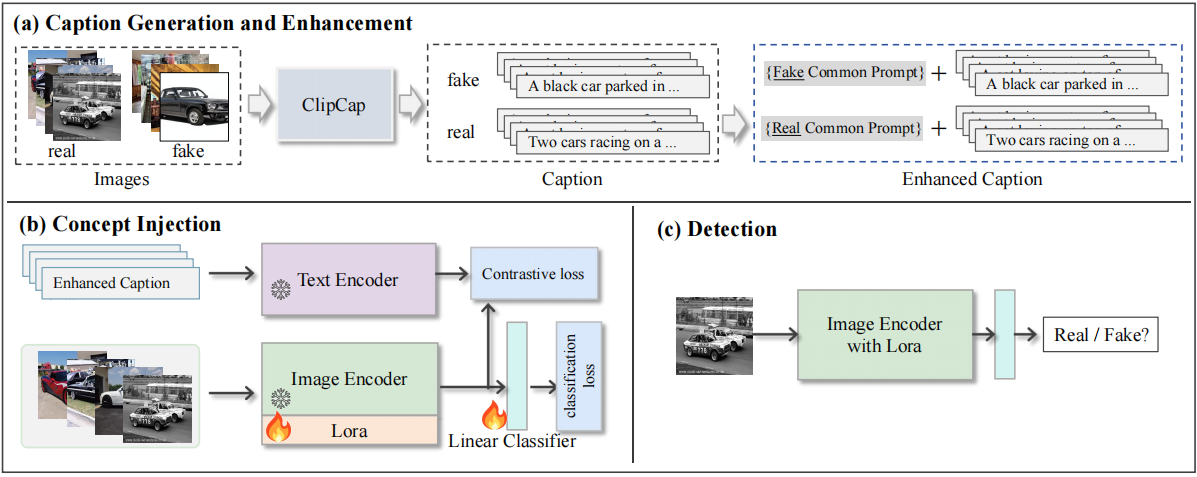
C2P-CLIP AAAI 2025
Introducing category-common prompts into vision-language representations for more generalizable deepfake detection.
Explainable Forensics & Multimodal Reasoning
Binary labels are often insufficient for trustworthy forensic analysis. I am interested in models that can identify abnormal evidence, localize it, describe it in natural language, and explain why it supports a forensic judgment.
AnomReason ICLR 2026
Semantic visual anomaly detection and reasoning for AI-generated images, moving from a single authenticity label toward structured anomaly descriptions and explanations.
ForenX
Exploring multimodal large language models for explainable AI-generated image forensics.
Trustworthy Visual Intelligence
My broader goal is to connect visual perception with knowledge and reasoning. This includes physical and semantic consistency, uncertainty-aware inference, multimodal evidence, and agentic systems that can use specialist tools to inspect visual hypotheses.
Across these directions, I am particularly interested in methods that are generalizable, evidence-grounded, and interpretable.
Collaboration
I welcome discussions and collaborations on computer vision, AIGC forensics, multimodal large models, explainable AI, and agentic reasoning. Email me.